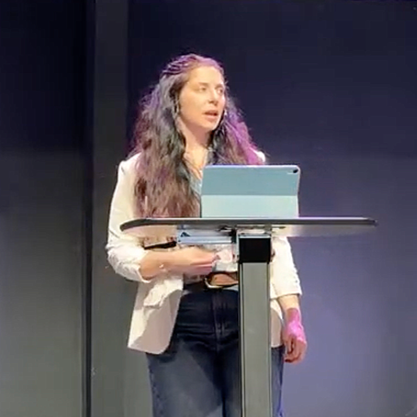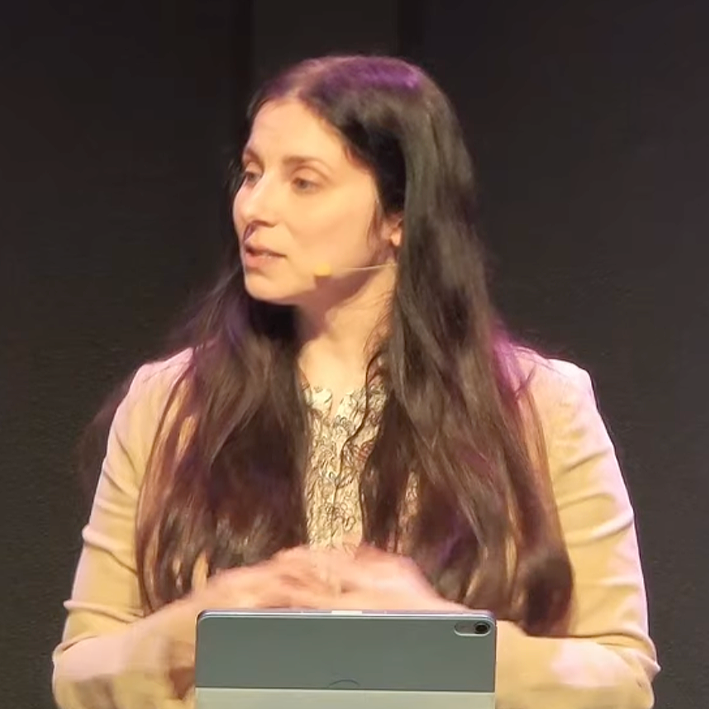
This message was preached at Sherwood Community Friends Church on Sunday, December 21, 2025. You can watch the video in full by clicking below.
One of the ultimate classic Christmas movies is Home Alone. It blends just the right amount of Christmas warmth and slapstick comedy, making it a longtime family favorite.
At the beginning of the movie, we are introduced to Kevin McCallister, an 8-year-old boy with a bend toward mischief. Our first instinct might be to see Kevin as a bit of a bad egg. But as we’re introduced to each of his family members, we begin to get the fuller story.
His big brother Buzz constantly berates him and pushes him away. When there’s a disruption at the family table, his mom, Kate, jumps quickly to blaming Kevin without naming the other instigating factors. And let’s not forget that she and dad Peter are so overwhelmed and unaware that Kevin isn’t with them at all, they leave him behind at home, even as they board the plane.
Kingdom Family
I think Home Alone continues to be a family favorite year after year because the family is so relatable. It names what we often struggle to find words for in our own family experiences—things like teasing that goes too far, the neglect of our voice, and becoming the scapegoat for family chaos.
And as we grow older, these dynamics don’t simply disappear. They often fester, turning into gossip, rage, abuse, slander, and even estrangement. The families we grow up in shape our concept of family.
At the heart of the Gospel, God is creating a new family, one where He is our Father, and where He dwells with His children, just as was always His intention.
The Dwelling Place
This is the Good News of Jesus Christ—the one we sing about song after song at Christmastime. He was sent by God from His place of deity to become Emmanuel—God with us. That God would live among us was always the original design.
When God created humanity in the Garden of Eden, He did so to dwell with us in shared love and communion.
When the Israelites were in the wilderness, He instructed them to build a tabernacle, a traveling dwelling place for him, so His presence would remain among them.
When they reached the Promised Land, a Temple was built, with a Holy of Holies where God’s presence would dwell in the midst of His people.
And when Jesus came in the form of a baby, God’s dwelling among us reached its fullest expression. This wasn’t a one-time or even sporadic visitation. He entered fully into human life. And this wasn’t Jesus just showing up one day. He showed up through a family.
Just as Jesus entered the world through a family, He invites us into His kingdom family. If you remember, we talked about this back in November when we studied Galatians 4:
“When the time came to completion, God sent his Son, born of a woman, born under the law, to redeem those under the law, so that we might receive adoption as sons. And because you are sons, God sent the Spirit of his Son into our hearts, crying, ‘Abba, Father!’ So you are no longer a slave but a son, and if a son, then God has made you an heir.” Galatians 4:4–7
We, Church, are where God’s Spirit dwells. But it’s not just about God dwelling in me individually.
There is a strong message permeating our culture right now that you don’t need to be part of a church to be a Christian. And while there may be a kernel of truth in that, it misses the fullness of what God has invited us into—His family. With the arrival of Jesus, God’s dwelling place is now us, together, as a family—as members of God’s household.
“So then, you are no longer foreigners and strangers, but fellow citizens with the saints, and members of God’s household, built on the foundation of the apostles and prophets, with Christ Jesus himself as the cornerstone. In him the whole building, being put together, grows into a holy temple in the Lord. In him you also are being built together for God’s dwelling in the Spirit.” Ephesians 2:19–22
We are being built together for God’s dwelling in the Spirit. We are God’s household. We are called to be his family.
The Problem with a Family
Now, this family of God language can be difficult to embrace.
For one, all of us arrive having already learned what “family” means from our families of origin. Some of what we learned was good and life-giving. But some of what we carry with us from our childhood formation can be deeply problematic.
We see this clearly in addiction research. When a child grows up with a parent who struggles with addiction or substance abuse, that child is two to four times more likely to develop addictive habits as an adult. The broader reality underneath that statistic is simple and sobering. Children learn by imitation. Whether they intend to or not, they absorb what they see. We carry into adulthood the patterns, wounds, and traumas we experienced as children.
Now imagine placing 250 people in a room, each with their own family story, their own learned behaviors, their own pain, and calling them a new family. That can feel like a stretch, can’t it?
The second challenge with this family of God language is that not all churches have been good families.
To be honest, some of the people who have hurt me the most have used this very language. They said, “We are family.” And I believed them. It seemed that we shared the same values, the same commitments, the same way of following Jesus. I thought the Jesus I was trying to follow and the Scriptures shaping my life were shaping theirs too. I believed we were in this together and that when conflict came, because it always comes, we would work it out so we could continue to be a family.
But that was not always the case.
Some were not sheep of the flock, but wolves seeking to devour. Jesus warned us about this. He told us that wolves would exist both outside the flock and among it, often disguised as sheep. That is why he tells us to be both wise and innocent.
Church hurt is real.
So as I stand here and name even my own experience, the question becomes: what do we do with that? Do we abandon the church altogether? Do we put up strong boundaries and keep everyone at arm’s length? Do we reject the language of family because it feels too costly or too risky?
But all of these approaches, understandable as they are, fall short of the full plan of God. They are guarded responses that stop short of the fullness of what God offers.
The truth is, we are family.
Paul’s letters are filled with instruction on how to live as members of God’s household. Again and again, he is not just addressing belief, but behavior. How we forgive. How we speak. How we submit. How we correct. How we reconcile. How we love. How we bear with one another.
So when we enter the family of God, something has to be laid down.
We do not keep operating by the rules of our upbringing. We do not default to the patterns we learned in our own families or how we raised our families. We do not even get to keep our personal playbooks.
Entering the family of God means laying all of those rules down and opening ourselves to his playbook.
The Jesus Family
I briefly mentioned the Israelites’ journey in the Old Testament, but there is one part of their story that feels especially relevant as we wrestle with this idea of family.
When God made his covenant with the Israelites shortly after they left Egypt, he gave them a clear warning in Exodus 34:
“Be careful not to make a treaty with the inhabitants of the land you are going to enter; otherwise, they will become a snare among you. Instead, you must tear down their altars, smash their sacred pillars, and chop down their Asherah poles.” Exodus 34:12–13
So what were these Asherah poles?
The Asherah poles were shrines dedicated to the goddess Asherah, a fertility deity worshiped by the surrounding nations. And this warning was not a one-time instruction. Nearly forty years later, as the Israelites stood on the edge of the Promised Land, God repeated himself:
“Do not set up an Asherah of any kind of wood next to the altar you will build for the Lord your God, and do not set up a sacred pillar. The Lord your God hates them.” Deuteronomy 16:21–22
So what do you think happened? Did they listen?
Sadly, no.
Once they settled in the land, the people began adopted these false representations of worship, setting these poles up next to God’s altar. Of the thirty-nine total kings of Israel and Judah, only four tore down the Asherah poles. Their presence represented allegiance to another god and a blending of worship that violated the first two of the Ten Commandments. God was clear. These objects were not harmless cultural artifacts. They were competitors for their loyalty to God.
Over time, their worship became compromised, their loyalty divided, and eventually they were taken into captivity once again.
Here is the connection that matters for us.
The Asherah poles were not just about false gods. They were about refusing to let go of familiar ways of living, worshiping, and relating. They were symbols of old habits, inherited practices, and cultural patterns that felt normal, even comforting, but were incompatible with faithfulness to God.
In the same way, when we enter the family of God, we bring with us deeply formed family habits.
Ways of dealing with conflict.
Ways of using power.
Ways of avoiding hard conversations.
Ways of controlling, manipulating, withdrawing, or dominating.
These patterns may feel familiar, but that does not mean they belong in the family God is forming.
If we want to avoid spiritual compromise, we must be willing to identify our own Asherah poles and tear them down.
This was at the heart of Jesus’ call.
“Follow me” was his invitation. He never forced anyone, but he was always clear. Following him would cost something. Jesus asked people to leave behind even their closest attachments. James and John left their father in the boat when Jesus called them. One man asked to bury his father first, and Jesus told him to follow now and proclaim the kingdom of God.
The life Jesus calls us into is not one of comfort or familarity. He does not invite us into a secluded commune with people who think exactly like us. He calls us into a life of uncertainty and trust out there in the world. Jesus said:
“Foxes have dens, and birds of the sky have nests, but the Son of Man has no place to lay his head.” Matthew 8:20
Even Jesus experienced rejection from his own hometown. And in Mark 3, he redefines what it means to belong to his family:
“Who are my mother and my brothers?’ Looking at those sitting in a circle around him, he said, ‘Here are my mother and my brothers. Whoever does the will of God is my brother and sister and mother.’”
Mark 3:31–35
We are knit together not simply by gathering on Sunday mornings, though that matters. We are knit together as a family through shared obedience, mutual submission, and the ongoing work of grace, mercy, and forgiveness.
So where do boundaries fit into all of this?
Scripture never calls us to tolerate abuse in the name of family. Guarding our hearts is biblical. Scripture confronts destructive behavior within the church and makes it clear that unrepentant harm cannot be ignored or spiritualized away. Boundaries are not the opposite of love. They are often the means by which love remains truthful and safe.
The purpose of a church family is not to excuse harm, but to be a place of growth. A place marked by deep grace and love, yes, but also accountability, repentance, and mutual responsibility.
Intention: Bring Others to Dwell with God
There is another purpose of the church. God gathers a people to belong to him and to reflect his character into the world.
Genesis 12 confirms that God’s design was for humanity to both be in relationship with one another and to reflect the generosity of God’s original design to the nations.
“‘I will make you into a great nation, I will bless you, I will make your name great, and you will be a blessing. 3 I will bless those who bless you, I will curse anyone who treats you with contempt, and all the peoples on earth will be blessed through you.’” Genesis 12:2-3, CSB
In just two verses, the language of blessing appears five times. But the blessing was never meant to stop with Abraham. God’s promise was always outward-facing.
When we reach the Gospels, we see this promise embodied perfectly in Jesus. He was a blessing wherever he went, if he was allowed to be.
Many of us are familiar with Jesus' final words, commonly known as the Great Commission.
“Go, therefore, and make disciples of all nations, baptizing them in the name of the Father and of the Son and of the Holy Spirit, teaching them to observe everything I have commanded you.” Matthew 28:19-20a, CSB
Discipleship is a relational journey, and the goal of that relationship is to bring humanity closer and closer to the revelation of God for themselves.
Christian freedom was never intended to be an inward-only journey. Instead, Paul writes in Galatians 5:13-14:
“For you were called to be free, brothers and sisters; only don’t use this freedom as an opportunity for the flesh, but serve one another through love. For the whole law is fulfilled in one statement: Love your neighbor as yourself.”
This was Jesus’ ministry and the ministry to which we are called. In Matthew 9, Jesus looks out over the crowds. He sees that they are dejected. They are a distressed people. Jesus brought compassion in his teachings, healings, and preaching of the kingdom’s good news. But Jesus knew that it couldn’t only be him to extend compassion and love.
“Then he said to his disciples, ‘The harvest is abundant, but the workers are few. Therefore, pray to the Lord of the harvest to send out workers into his harvest.” Matthew 9:37-38
He then proceeds to send the twelve disciples–ordinary men–to receive hospitality from others, build relationships, physically heal the sick, and proclaim the kingdom of God, just as Jesus does himself.
How do we do this?
So how do we do this? We do we invite others into the family of God?
Earlier this year, we spent five weeks working through B.L.E.S.S.: 5 Everyday Ways to Love Your Neighbor and Change the World. It is not the only way to engage others, but it offers a simple and tangible framework for how we live with the people around us.
B.L.E.S.S. stands for Begin with prayer, Listen, Eat, Serve, and Share your story. While it is a helpful acronym, it points to something deeper than a strategy. It names a way of life rooted in prayer, presence, hospitality, service, and testimony. This is the way of Jesus.
We begin with prayer, inviting God into our relationships before anything else. We listen because people long to be seen and known. We eat together because shared tables create belonging. We serve because love must be lived out in action. And we share our stories because when Jesus changes our lives, silence is no longer an option.
And this is happening among us!
A year ago, Dave and Chris moved into their new neighborhood and they decided this year to get to know their neighbors by inviting them to some Christmas cheer at their house. Conversation over cookies. And guess what? People came!
Craig and Wendy have a neighbor who is mostly alone. But when he has a need, the McIndoos are who he reaches out to because over the last few years, they have been intentional to reach out and make connection-despite some attempts to push them away.
These are just a couple of examples of what Christ’s love looks like. In a world that isolates and divides, the kingdom draws people together and to the Father through persistent love.
But I think that before we can be an example to the world around us, we must consider how we are blessing one another within our own church family.
We begin with prayer. We often talk about prayer here, and we provide tools to help us do that. When is the last time you joined us for a prayer meeting, if ever? Do you pray through our monthly prayer list? Are you praying for your other brothers and sisters in this room?
We listen. When was the last time you asked someone here about their story? Truly listening is one of the simplest and most powerful ways we bless each other. Many times our assumptions are dropped once we understand the opposing perspective.
Our Friends Groups are a great space to listen to others and our next season kicks off January 12.
We eat. If there is nothing else to know about Robert and I, we love food and we love to share it with others!
We create opportunities to share meals as a church, like our Table & Amen once a month gathering or our Pizza & Game Days. But this can also happen in everyday ways. A meal, coffee, or a shared table can form deeper connection than we realize.
We serve each other. There are opportunities to serve here,
especially with our kids, but service also looks like bringing a meal, offering a ride, or helping with something practical. These acts communicate Christ’s love in tangible ways. And, when someone is willing to serve, we must also be willing to receive. Jesus received care from others, and allowing ourselves to be served is part of living as a family.
Finally, we share our stories. Whether one-on-one or more publicly, your story of God’s faithfulness matters.
In fact, we are looking for stories of generosity now. If you have been the recipient of or have a story to share about generosity in the form of time, talent, or treasures, connect with Robert.
The Goal: As Many People Dwell with God as Possible
So where is all of this headed? What happens when the story reaches its end and Jesus returns?
Scripture tells us the goal has always been the same.
“Then I heard a loud voice from the throne: Look, God’s dwelling is with humanity, and he will live with them. They will be his peoples, and God himself will be with them and will be their God.” Revelation 21:3 CSB
This is the fulfillment of everything we have talked about. God dwelling fully with his people. No distance. No division. No broken family systems.
“and there will no longer be any curse. The throne of God and of the Lamb will be in the city, and his servants will worship him. They will see his face, and his name will be on their foreheads. Night will be no more; people will not need the light of a lamp or the light of the sun, because the Lord God will give them light, and they will reign forever and ever.” Revelation 22:3-5
The new creation is one of healing, abundance, light, and eternal communion with the saints and God. No curse. No separation. God fully present with his people forever.
Conclusion
Advent reminds us that God came near. He did not choose to remain distant on a mountaintop or hidden in the clouds.
The story of Christmas is not only that God visited humanity, but that he chose to live with us. From creation, to the tabernacle, to the temple, to the manger, God’s desire has always been the same: to live among his people. And now, through us Church with Jesus, that dwelling continues.
The presence of God no longer rests in a building or a tent. It moves through a people who carry his love into everyday life. This is what it means to be the church. We are the dwelling place of God by his Spirit. And he sends us near to others. We become the embodiment of God’s love in the world. This is how the world comes to recognize the King, through the love of his people, the church. The world will recognize the King through love in the form of:
prayers whispered for a neighbor.
listening ears across a cup of coffee.
meals shared at ordinary kitchen tables.
serving hands.
stories of redemption spoken with humility and courage that testify to God’s faithfulness.
The goal of being a blessing is that as many people as possible would dwell with God. We can live as a preview of the future reality of the new earth today.
So may we celebrate that God came near. And may we go near to others. May our homes, our tables, and our lives become places where the presence of God is felt.
Before I close us, here are a few reflection questions that we will consider for few minutes:
Who in our church family is God inviting you to BLESS today?
Who in your circle outside of our church is God nudging you to BLESS this week?
Who do you have unresolved conflict with that needs to be resolved with an apology and an invitation to coffee? (expound about life being short - what if this was the last Christmas you might have the opportunity to make something right?)
We, Church, are an expression of the God-built community life, a representation of unity, and a place to discover and utilize one's spiritual gifts as determined by the Spirit.
We are certainly full of our quirks difference of opinons and oddities. To be family does not mean to be uniform or to conform. But it does mean that we commit to each other. We say “YES” to being a part of the family of God.
We are a people who gather for sound and scriptural teaching. We share wise counsel and loving correction, holding one another to higher standards of righteousness and justice. We walk in holiness and grace.
We are the family of God, the dwelling place he calls home. This is our greatest witness to the world around us–that Jesus is our King and he is Emmanuel. God with us.